The Ultimate Guide to Fine Art Moving & Logistics
Moving a single painting across town might seem simple enough. But when you are responsible for an entire collection, each piece carries its own structural vulnerabilities, environmental sensitivities, and irreplaceable value. Standard moving services were never built for this kind of precision. Fine art logistics is a specialized discipline that sits at the intersection of conservation science, supply chain management, and high-touch service.
Whether you are relocating a private collection, preparing for a gallery installation, storing artwork during a renovation, or coordinating a long-distance move, this guide explains what to expect and how to protect your pieces from avoidable risk.
What Makes Fine Art Vulnerable
During a Move?
Artworks are engineered to last centuries under stable conditions. A move introduces variables that those stable conditions were never designed to accommodate.
Vibration
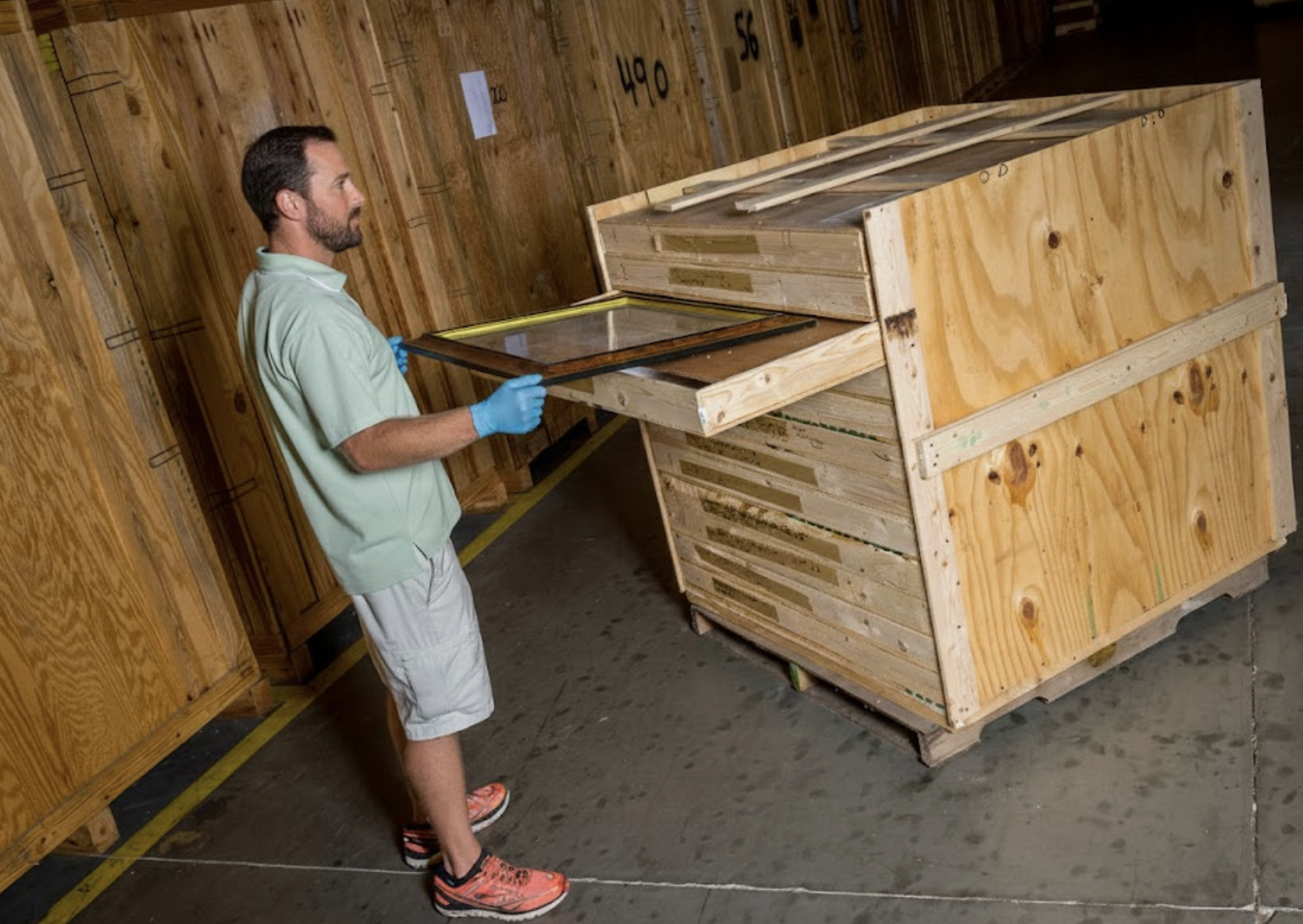
Canvas fibers can stretch microscopically, aged wood frames can develop hairline fractures, and gesso ground layers on paintings can separate from their supports when subjected to repeated road vibration over hundreds of miles. These failures often go unnoticed for months until a crack appears or pigment begins to flake.
Temperature and humidity swings
Paint layers and wooden substrates expand and contract at different rates. A canvas that travels through a humid region and then enters an air-conditioned vehicle can accumulate moisture inside the frame, creating conditions for mold growth within days. Oil paintings are especially sensitive. Their surfaces remain chemically active for decades, and rapid environmental shifts can accelerate cracking patterns that conservators call craquelure.
Physical mishandling
gets the most attention, but it accounts for fewer incidents than environmental damage, simply because it is more visible and therefore more preventable with proper training. The real risk profile of an art move is weighted toward the invisible forces that accumulate over time.
How is Fine Art Moving Different from Traditional Moving Services?
Fine art moving is different from traditional moving because it is focused on preservation, not just transportation. While standard movers are typically trained to move everyday household or commercial items, fine art movers evaluate each piece based on its size, medium, frame, age, condition, value, and destination before it is packed or handled.
This specialized process often includes archival packing materials, custom crating, climate-controlled transportation, condition reports, inventory tracking, and chain-of-custody documentation. These steps help protect artwork from scratches, cracking, warping, moisture damage, vibration, and handling errors while giving collectors, galleries, museums, designers, and homeowners greater peace of mind.
Professional Packing Techniques for
Fine Art
Soft Packing
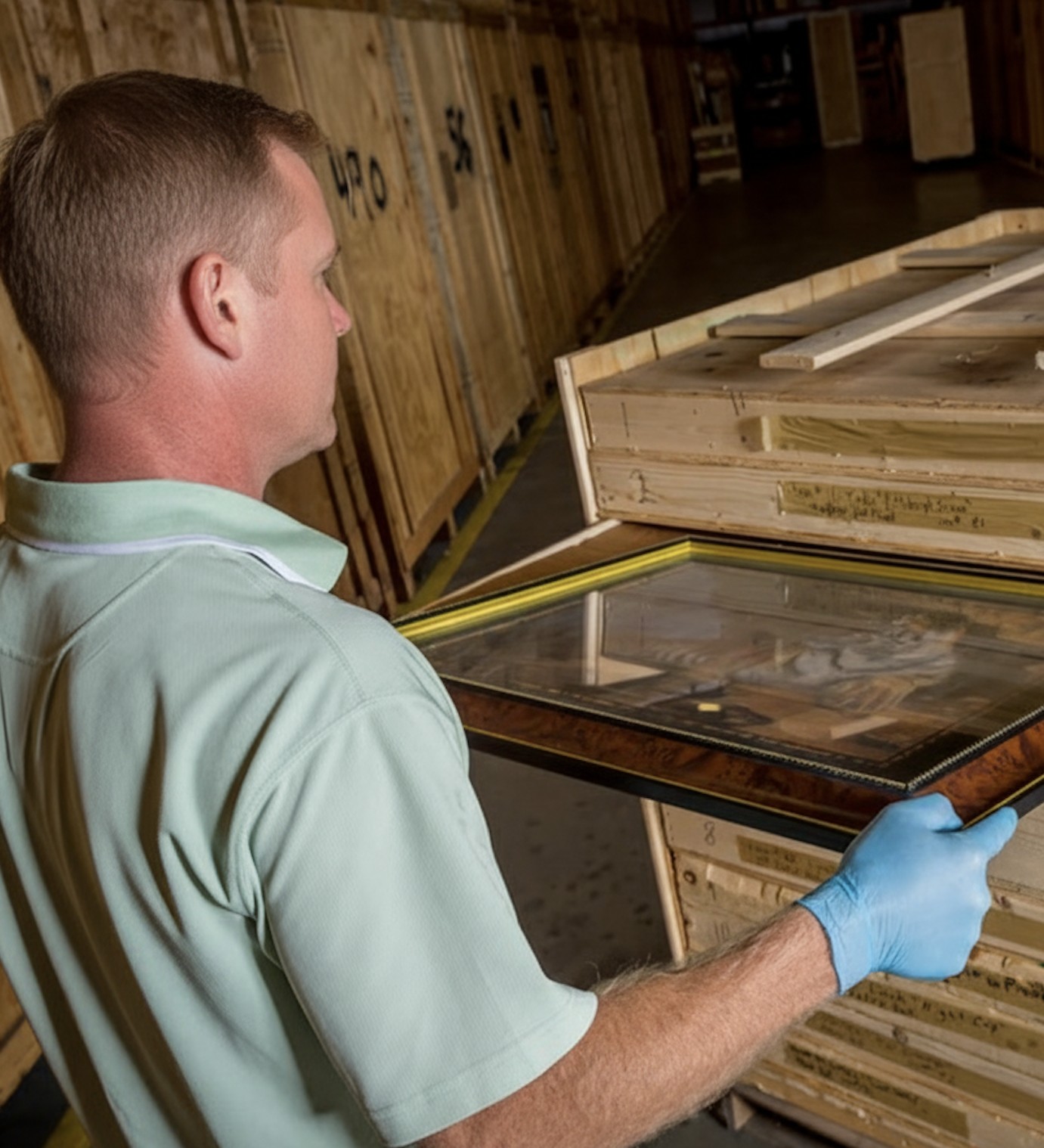
This applies to framed works traveling short distances in controlled conditions. Conservator-grade glassine paper goes against the painted surface first, creating a barrier that will not transfer fibers or chemicals. Acid-free foam boards are then secured to the front and back, distributing pressure evenly. The entire package is wrapped in polyethylene sheeting and sealed against moisture. This method works well for local gallery deliveries and short-haul moves.
Custom Crating
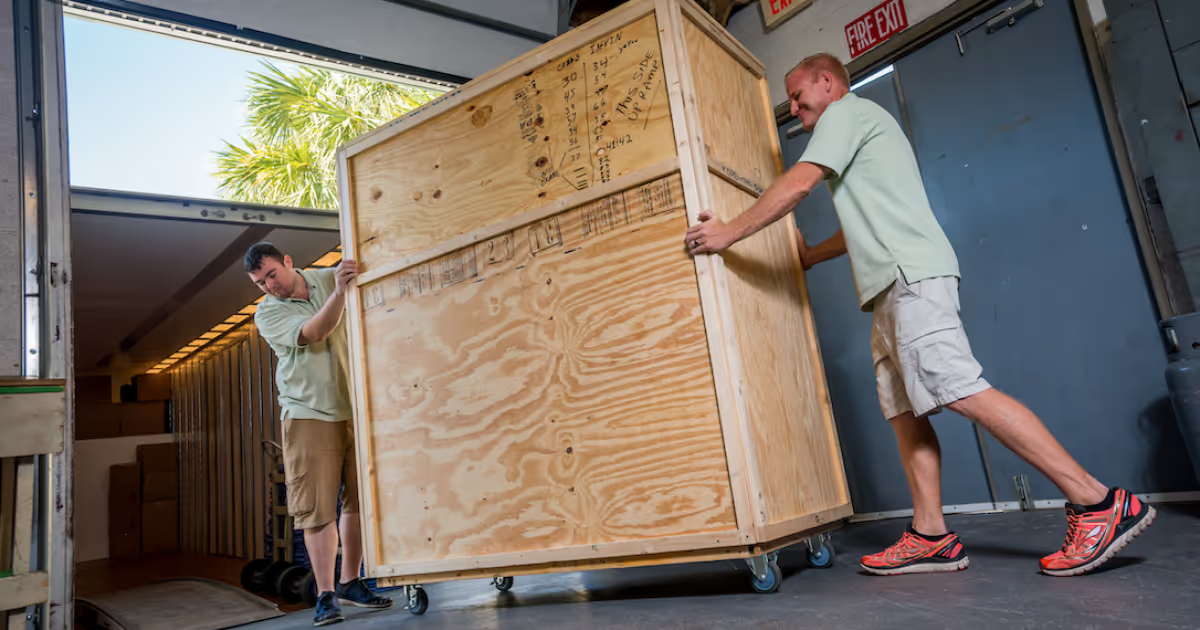
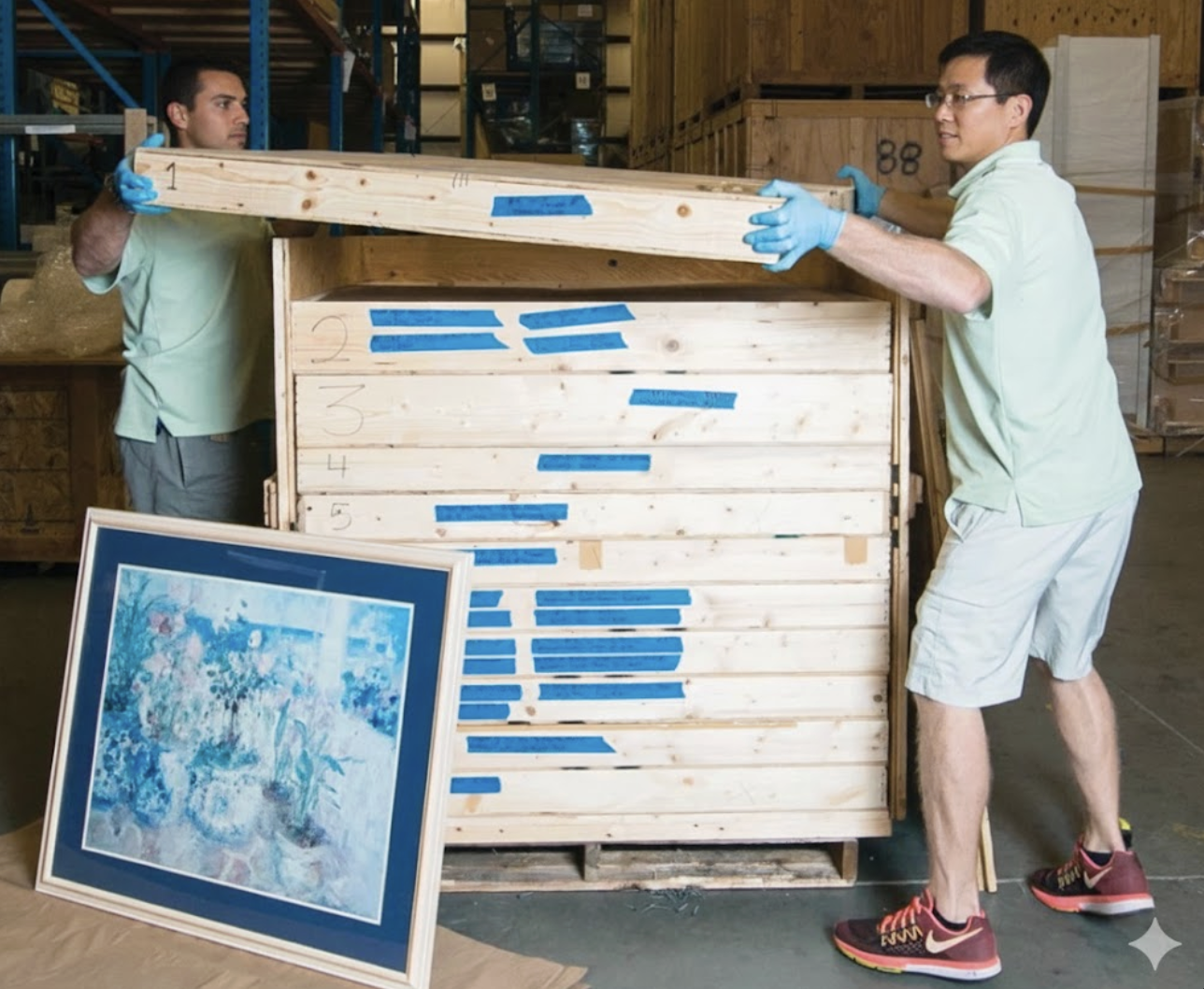
Each crate is built to the exact dimensions of the artwork it will carry. The interior uses closed-cell polyethylene foam cut to precise tolerances, suspending the piece in a shock-absorbing cavity that isolates it from external impact. Museum-grade crates use low-emission materials or are lined with activated carbon filters for particularly sensitive works. Custom crating is necessary for long-distance transport, international shipments, and any piece with a value that justifies maximum protection.
Sculpture and Three-Dimensional Pieces
The challenge shifts from surface protection to weight distribution and structural support. Custom armatures built inside the crate cradle the sculpture at its strongest points, leaving fragile projections untouched. Ethafoam blocks are carved to match the contours of the piece, eliminating any point-load stress that could concentrate force on a narrow area.
Climate Control and Environmental Protection
- Excessive heat and freezing temperatures
- High humidity and direct sunlight
- Water intrusion
- Dust and airborne contaminants
- Pest exposure
- Sudden temperature swings
- Prolonged time in uncontrolled spaces
Receiving and Inspection Services
- Condition documentation and photography at intake
- Secure climate-controlled storage until the installation date
- Coordination with the designer, contractor, or homeowner for delivery timingWhite-glove placement and installation on delivery day
- Chain-of-custody records from the vendor through to final placement
Insurance and Documentation
- Are they licensed and insured for the full replacement value of your collection?
- Does their coverage extend through any intermediate storage period?
- Will they provide a condition report and photographs at pickup and delivery?
- Is there a documented chain-of-custody process for every handler involved?
How to Evaluate a Fine Art Moving Company
- Do you build custom crates in-house or outsource to a third party? In-house crating means tighter quality control and the ability to build to exact specifications.
- What are your climate monitoring specs during transport? Look for documented temperature and humidity ranges, not just a claim that vehicles are climate-controlled.
- Can you walk me through your chain-of-custody process? A professional operation should be able to account for every handler from pickup through delivery.
- What does your insurance coverage include? Verify that coverage extends through transit and any intermediate storage, and that per-piece limits are adequate for your collection.
- Do you have experience with pieces like mine? Ask specifically about the medium, scale, and any unusual structural conditions relevant to your collection.
- What is your process if something is damaged? A clear, documented claims process is a signal of a professional operation. Vague answers are a warning sign.
Practical Checklist for Your Fine Art Move
Use this checklist to guide your planning process. Most professional art logistics providers recommend beginning the conversation at least four to eight weeks before your intended move date.
Before the Move
- Schedule an on-site consultation with your art logistics provider. They should assess each piece individually, noting materials, dimensions, condition, and special requirements.
- Request a condition report for every artwork. Photograph each piece under raking light and document existing damage in writing.
- Verify insurance coverage. Confirm that your policy covers replacement value, transit, and intermediate storage.
- Prepare a detailed inventory. Include artist name, title, medium, dimensions, year, and current appraised value. This document serves both insurance and logistics planning purposes.
- Communicate any time constraints to your logistics team. Exhibition deadlines, installation schedules, and closing dates all need to be reflected in the timeline.
- If international shipping is involved, research the destination country's import requirements and begin gathering documentation for customs.
During the Move
- Confirm that all packing materials are appropriate for each piece.
- Verify that climate monitoring systems are active and that acceptable temperature and humidity ranges have been set before loading begins.
- Observe the loading sequence. Heavier crates should be placed first, with lighter and more fragile pieces secured on top or in separate compartments.
- Obtain a copy of the signed bill of lading that matches your inventory exactly. Every item should be accounted for at pickup.
After Delivery
- Allow for an acclimatization period before unpacking. A minimum of 24 hours in the new environment is standard.
- Perform arrival condition reports. Compare against pre-move documentation and note any changes, no matter how minor.
- File any damage claims immediately with supporting photographs and documentation. Most policies have strict filing windows.
- Update your collection inventory with new locations, condition notes, and any observations about the move that will inform future logistics planning.
Frequently Asked Questions
Schedule as early as possible, ideally two to three weeks for a single piece and longer for full collections, estate moves, gallery installations, or long-distance transport.
Yes, many fine art movers can assist with placement, hanging, sculpture positioning, and coordination with designers or homeowners.
Clear pathways, remove nearby obstacles, secure pets, and keep appraisals, inventory lists, floor plans, or placement notes available.
Yes, oversized or irregular artwork can be moved safely with proper planning, specialized equipment, additional handlers, and custom packing or crating.
A professional fine art mover will have a documented claims process and the condition reports and photographs to support it. You should file a claim immediately after delivery with documentation of the damage. This is exactly why pre-move condition reports and photographs are not optional: they establish the baseline that any claim depends on.
In most cases, no. Standard homeowner policies typically do not cover fine art at full replacement value during transit, and they often exclude high-value individual pieces unless those pieces are specifically scheduled on the policy. Confirm coverage with your insurance provider before the move and ask your fine art mover about their transit insurance as a complement.
Experienced fine art movers regularly coordinate with appraisers, art advisors, conservators, and designers as part of the logistics process. If you have an existing relationship with any of these professionals, your mover should be able to incorporate their input into the planning.
Choose the Right Fine Art Moving Partner
The company you trust with your artwork should understand more than how to move heavy or fragile items. Fine art requires trained handling, preservation-minded planning, proper packing materials, climate-controlled options, detailed documentation, and careful coordination from pickup to placement. Before hiring a team, look for experience with pieces like yours, clear insurance guidance, secure storage capabilities, and a process that protects both the artwork and the owner's peace of mind.
William C. Huff brings white-glove care to every stage of fine art moving, from private collections and gallery deliveries to designer installations, climate-controlled storage, and long-distance logistics. With specialized equipment, experienced handlers, and a deep understanding of high-value possessions, our team helps ensure each piece is protected with the attention it deserves.
Contact us today to discuss your needs, and we’ll create a fine art moving plan tailored to your collection.